




By Jabulani Shaba and Sandra Swart
In Zimbabwe, they say Hanzi bhande rinonzvenga vakadzi vakapinda mumigoghi (The gold belt will disappear if women enter the underground mine).
Many men on artisanal or small-scale gold mining sites are uncomfortable working with women in their syndicates because of this commonly held cultural belief that women “pollute” the sacredness of the mining space.
Yet women remain a lively, if sidelined, community in the country’s growing mining sector. By 2000, more than 500,000 people worked in artisanal and small-scale mining in Zimbabwe. By 2018, it was estimated that the number could be up to 1.5 million. But this doesn’t include people operating illegally.
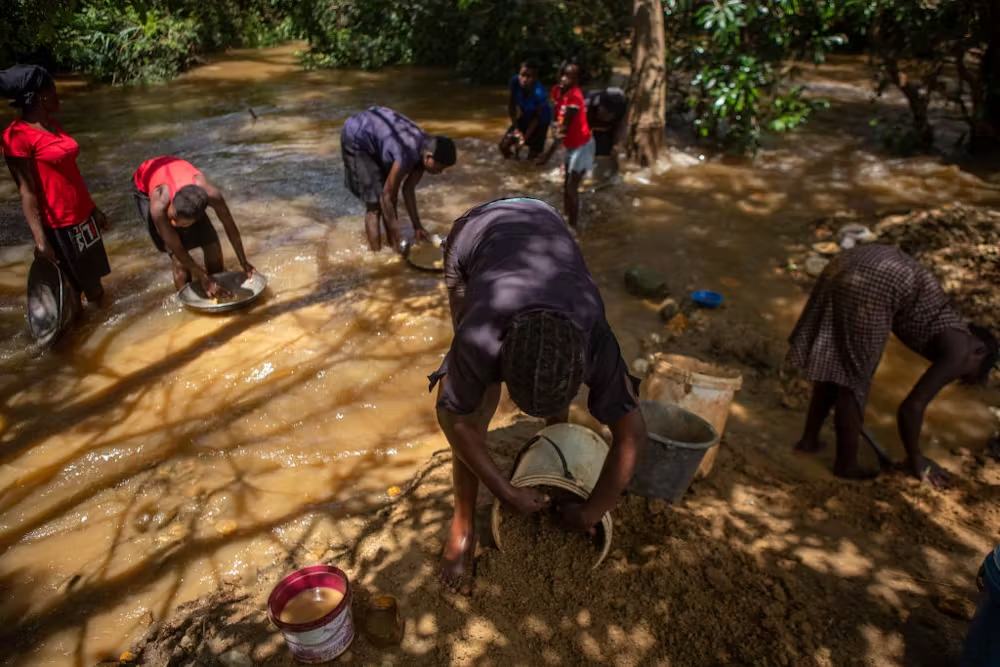
Women’s roles have varied inside this industry: they have been vendors, sex workers, and alluvial gold washers, panning for gold along streams. Zimbabwean women in artisanal mining are the subject of our recent paper, drawn from a more extensive study in Mazowe, 40 km from the capital, Harare.
While the primary goal of the research was to understand women’s experiences and power relations in this masculine sector, we realised there was something else to be uncovered—a secret world of ritual, rite, and rumour.
We found that women under spiritual and ancestral possession (often referred to as masvikiro) have developed a new commercial vision of the mines.
They have created spiritual shrines visited by men seeking to make their fortunes. They profit from the beliefs of miners that their ritual instructions help them find gold.
Women at these mines are not allowed to go underground themselves, but their occult spirit accompanies miners deep underground and guides them in looking for gold.
So, some women have tapped into spiritual economies in Mazowe to support their livelihood. Even in a deeply patriarchal society, these women push back against the social and cultural order of masculine mine spaces.
Our study of occult practices is one of the outcomes of extensive fieldwork over 13 months in the small mining community of Jumbo in Mazowe.
The research involved interviews with 40 women and 20 men and social conversations and observations. It included analysis of social media, mining reports, and archive material. The goal was to highlight the dynamics that shaped women’s experiences in a gold mining frontier.
This included exploring the connections between gender and the occult and the intimate rituals of how women survive in the mines.
Persisting land inequalities in Zimbabwe have catapulted women into artisanal gold washing to support their rural livelihoods. Yet poverty was not the only trigger; other women acquired gold mining licences and accumulated more profits in Mazowe.
Some women in Mazowe engaged in cross-border trading activities, and those who worked as domestic workers in South Africa and Botswana returned to Mazowe and invested in gold pits. They subcontracted male labourers to work for them—a process that came to be known as ku sponsor makomba (financing gold pits).
In the post-2000 era, illegal gold mining continued to escalate. This was followed by a surge of sex workers in artisanal gold mining sites across the country. Sex work offered a lucrative business opportunity for women in a declining economic situation. Women in our study highlighted the need to provide food for their families as a key factor that pushed them into the sex trade.
A further commercial opportunity in Mazowe’s mines became spiritual work.
Zimbabwe has a long history of superstitions about women and mining. We discovered occult practices are popular and are used for different purposes by various social groups.
In the post-colonial period, miners have become targets of many fake prophets and diviners. They promise easy access into the mining world and guarantee strikingly rich gold veins.
Men in the mines use the occult to increase their dominance and masculinity over other men. There are many forms of rituals, including using marijuana (mbanje) to instill courage and chase away evil spirits.
Some women tapped into these existing spiritual life worlds to make money through spiritual entrepreneurship. In Mazowe, for example, Nehanda—an influential and revered ancestral spirit—is still venerated. Artisanal miners shared stories about visits to these shrines to seek advice from women possessing Nehanda’s spirit. The diviners provide specific instructions for the men’s rituals at mining sites.
There were also numerous stories of how miners consulted the older women. It was reported, for example, that one helped the miners through kurombesa (the use of ritual charms). Miners would suck her breast, and then they would strike a gold belt afterwards.
While these stories portray a “mythical” productive role played by women in ritual practices, they also show how this mining community regards the female body. In this case, it is associated with good fortune and, at the same time, death. It’s important to note that the sucking of breasts was seen to be a sacred activity, and miners were supposed to honour the purity of the act.
These local beliefs have roots in the country’s precolonial history. Like many African cultures, Zimbabwean iron smelters traditionally used female body features to decorate and create their mining tools’ shapes.
Sex workers in the district also developed new strategies for making a living, tapping into rituals and using rumours circulating in the community. These women gained an understanding of the social and economic dynamics of mining settlements: when some miners get money from selling gold, they spend it on alcohol and sex.
However, some men in the community feared the agency of sex workers who were using rituals. They referred to these women as “sperm mongers” who secretly kept using condoms to take the sperm to “witchdoctors” to create potions to bathe in. It was believed this would make them sexually appealing.
While some sex workers denied the claims, a few admitted to them, and one said:
We use muti to attract our clients and get more money to feed our families, as compared to our men, who usually want the money to spend and drink alcohol.
We argue that instead of being just “polluters of the mines,” women are central to understanding the ritual life of artisanal gold mining in Zimbabwe.
A neglected part of women’s history can be understood by unpacking their entrepreneurial everydayness. This can help trace women’s role as they work to survive within male-dominated communities.
The Conversation


