




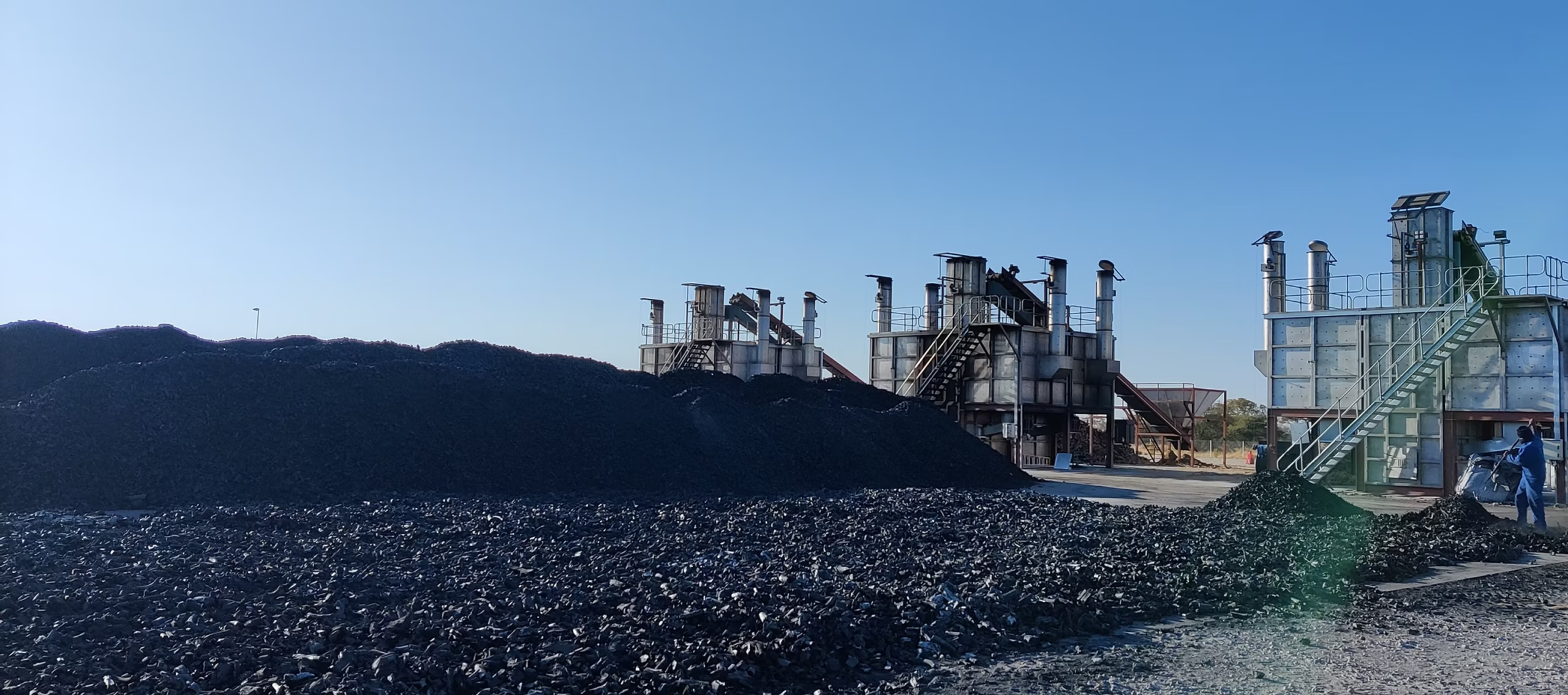
Carbon Capital, through its Farm Gai Kaisa operation in the Otjozondjupa Region, has produced 16,291 tonnes of certified biochar, making the farm a significant contributor to the global carbon-removal market.
With 1.6% of worldwide deliveries, Gai Kaisa has become a cornerstone of Namibia’s rising bioeconomy and a practical demonstration of how encroaching bush can be turned into high-value climate products.
This is according to Managing Director Colin Malan Lindeque, who posted the update on LinkedIn, crediting the project’s success to the team’s consistency and rural impact.
“Our biochar is improving Namibian agricultural soils and helping to restore degraded savannah ecosystems in the process,” he wrote. “We sustain 85 jobs, pump millions into the rural economy every month — big things coming soon.”
His post underscored not only the delivery milestone but also Carbon Capital’s strategic direction as it broadens its footprint across Namibia’s biomass, energy, and bioindustrial sectors.
Farm Gai Kaisa, developed as one of Carbon Capital’s flagship biomass ventures, uses retort kiln technology to convert encroacher bush into high-quality biochar.
The project was established to restore rangeland, stimulate rural livelihoods and unlock new climate-market revenue streams for Namibia.
Environmental filings for the Gai Kaisa project state that the project enhances foreign currency inflows and strengthens support for surrounding communities.
The farm currently employs 85 direct workers, with the broader local economy connected to bush-harvesting crews, logistics providers, maintenance teams, and rural service enterprises.
Environmental impacts — from limited vegetation disturbance to dust, noise and diesel storage — were rated minor and manageable, with mitigation measures such as dust-collection systems, silenced generators and restricted vegetation clearing under the Forestry Act.
Water demand remains low, estimated at 2,000 m³ during construction and 200 m³ per month thereafter.
The Gai Kaisa initiative sits within a much broader Carbon Capital portfolio designed to build a modern Namibian bioeconomy.
The company, established in 2020 by Cirrus Capital and the Viridescent Trust, is advancing several industrial-scale projects.
Retort Charcoal Producers, a N$220 million sustainable charcoal plant is expected to produce 20,000 tonnes annually; Acacia Energy, a N$260 million biomass-to-energy company offering heating, cooling and power solutions to industrial clients; and BushValue, a pilot project developing cost-effective biomass feedstock capable of replacing coal.
Additional initiatives in biofuel production, animal fodder, value-added biomass processing and new biochar ventures are already under development.
Lindeque, a biotechnologist and former head of the Namibia Biomass Industry Group, leads the company alongside economists Rowland Brown and Romé Mostert.
Biochar remains central to the environmental and economic significance of these efforts.
Produced through pyrolysis — the heating of biomass in a low-oxygen environment — biochar locks carbon into a durable form that can remain in soil for hundreds to thousands of years.
In Namibia’s harsh conditions, where soils are sandy, nutrient-poor and vulnerable to drought, biochar improves soil structure, enhances water retention, strengthens nutrient availability and boosts microbial health. These improvements increase crop yields, revive grazing lands and reduce reliance on chemical fertiliser. Because biochar stores carbon rather than releasing it, it is one of the world’s leading natural carbon-negative technologies.
This is where Namibia’s national advantage becomes clear. With 45 million hectares of bush-encroached land, the country holds one of the world’s most extensive biomass reserves — historically a constraint on livestock farming but now a raw-material base for a new green industry. Turning this bush into biochar transforms an ecological challenge into a regenerative economic opportunity.
Farm Gai Kaisa’s 16,291 tonnes of certified deliveries show how a single rural project can play a global role in carbon sequestration while boosting local economies.
Its 100% delivery track record sets it apart in international markets that increasingly require reliability, traceability and verified climate impact.
As Carbon Capital moves to scale its projects, a blueprint is emerging for a Namibian bioeconomy built on land restoration, industrial innovation and measurable climate benefits.
Gai Kaisa is a model of what Namibia can achieve when science, investment and environmental necessity align — a foundation for a future in which rural regeneration, climate action and economic diversification grow together, one tonne of biochar at a time.
Biochar offers a range of benefits, particularly suited to Namibia’s harsh and variable environment. Much of the country’s soil is sandy, nutrient-poor and highly vulnerable to drought, which limits agricultural productivity. When applied to these degraded soils, biochar improves soil structure, boosts water-holding capacity, enhances nutrient availability, and supports the growth of healthy microbial communities. This combination makes both crop fields and grazing lands significantly more resilient during dry periods.
Its value extends beyond the soil. Because biochar production in Namibia relies on encroacher bush, it helps reduce bush density, opening up rangelands and restoring savannah ecosystems that have been suppressed by decades of woody overgrowth. The result is improved grazing capacity and healthier landscapes for livestock farmers.
Biochar also plays a strategic role in climate mitigation. It is one of the few carbon-negative products in the world, as the carbon absorbed by the bush is locked in the soil for decades or even centuries rather than being released as CO₂.
This contributes to Namibia’s efforts to reduce emissions while creating new opportunities in global carbon markets.
At the same time, biochar production supports rural livelihoods. Projects like Farm Gai Kaisa provide stable jobs, stimulate economic activity and create new income streams for remote communities, all while regenerating the land on which those communities depend.
Over the long term, farmers benefit from improved yields, reduced reliance on fertilisers, and greater climate resilience — outcomes driven by better moisture retention and a more stable nutrient supply in biochar-amended soils.


